Veneers: debunking the myths

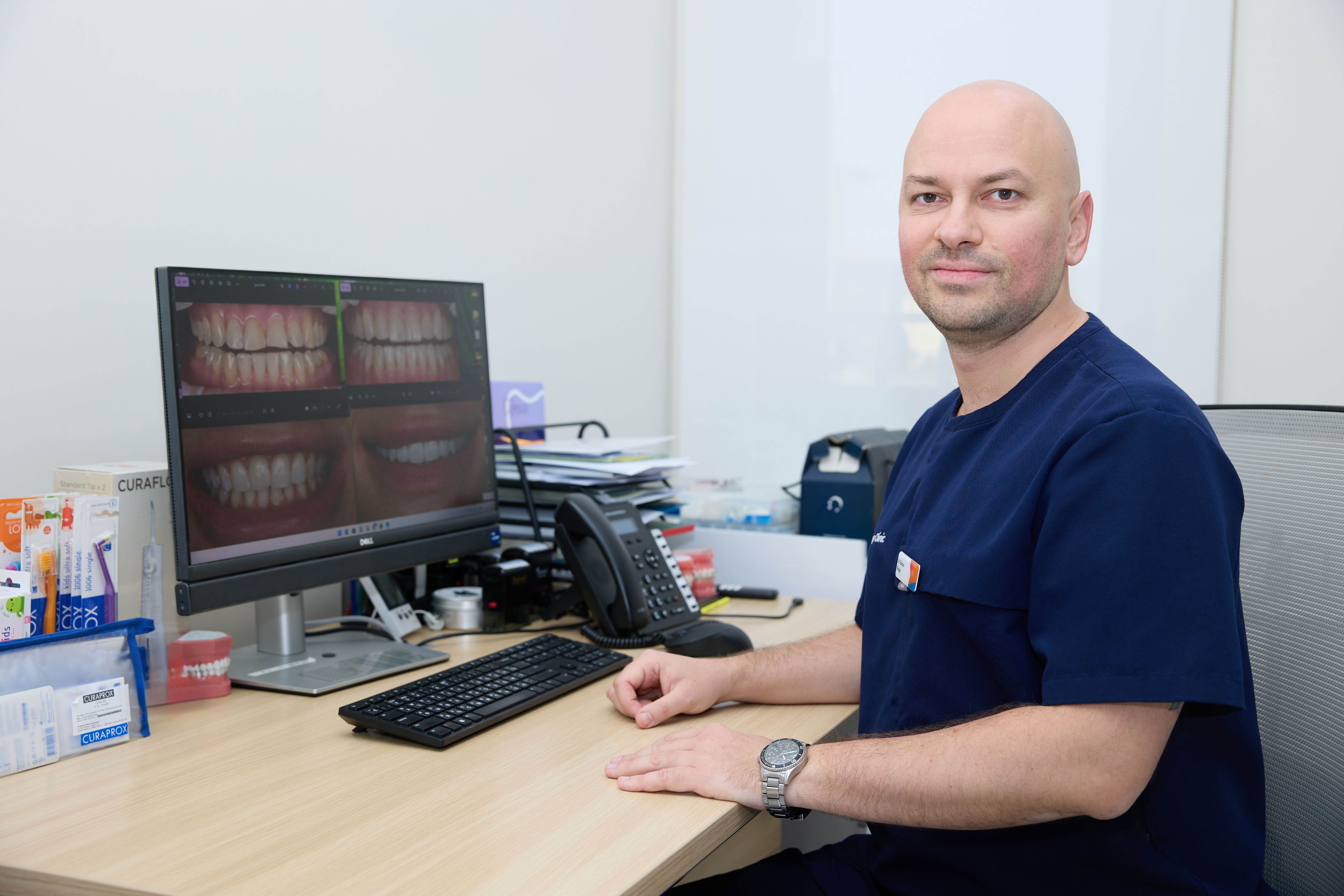
Veneers are thin ceramic shells designed to improve the shape, color, and proportions of teeth. It is important to understand that veneers are not a “one-size-fits-all solution,” but rather one of the tools of modern aesthetic and functional dentistry.
It is important to understand that veneers without any tooth preparation do not exist — this is a marketing term. Before placing ceramic veneers, the enamel is always prepared, at least minimally.
In practice, there are two main approaches:
- Minimal preparation — conservative enamel treatment
- Classical approach — with more extensive tooth preparation
With minimal preparation (mechanical or chemical), the dentist removes only the necessary amount of tissue, and in some cases may not remove it at all. However, this approach is not always possible and depends on the initial situation: tooth position, color, volume of existing restorations, and the patient’s goals.
If significant changes in shade, shape, or position are required, more extensive preparation is usually necessary to ensure an aesthetic and long-lasting result.
Veneer placement stages
On average, plan for 3–4 visits. In some cases, an additional visit may be required for fine adjustments.
1. Diagnosis and planning
At the first appointment, we discuss your expectations, take photographs, analyze the bite, and perform digital scanning to accurately plan your future smile.
2. Mock-up (trial smile)
A temporary version of the future teeth is created and tried on. You can evaluate the shape and length in advance and understand whether it feels comfortable to speak and smile.
3. Tooth preparation
After approving the design, we perform conservative enamel preparation (if indicated). Final scans or impressions are then taken for the laboratory. Temporary veneers are placed for this period.
4. Placement of permanent veneers
After try-in and final approval of color and shape, the veneers are bonded. A follow-up visit is scheduled after 1–2 weeks.
Lifespan of veneers
Veneers typically last 10–15 years or longer if three key conditions are met:
- Accurate diagnosis and proper indications
- High-quality lab work and correct bonding
- Patient compliance: regular hygiene, check-ups, and protection from overload (night guard if needed)
Longevity is also influenced by habits such as nail biting, chewing hard objects, as well as bite condition and bruxism.
Who is not suitable for minimal-prep veneers
This is not the best option if there are:
- severe bite issues
- significant discoloration
- large old fillings or extensive tooth damage
- active gum disease or poor oral hygiene
In such cases, the doctor will suggest a more reliable alternative: traditional veneers, crowns, or preliminary orthodontic treatment.
Why minimal-prep veneers are more expensive
This is highly precise work where every fraction of a millimeter matters. It requires meticulous planning, refined clinical technique, and high laboratory accuracy. Therefore, this protocol is often more labor-intensive for both the dentist and the technician.
At Kandinsky Clinic, we select solutions individually — from minimally invasive aesthetics to comprehensive rehabilitation in complex clinical cases. Our goal is not just to “create beautiful teeth,” but to achieve a stable, functional, and natural result for years to come.
You can book a consultation in Dubai via WhatsApp or by calling Kandinsky Clinic at +971 456 312 00.