Otitis: Symptoms and Treatment in Adults

Otitis is an inflammatory process that can affect the outer, middle, or inner ear. Symptoms of otitis in adults include pain, hearing loss, and a feeling of ear congestion — but the condition manifests differently depending on which part of the ear is inflamed. In most cases, otitis can be successfully treated conservatively, without complex procedures or surgery.
Types of Otitis
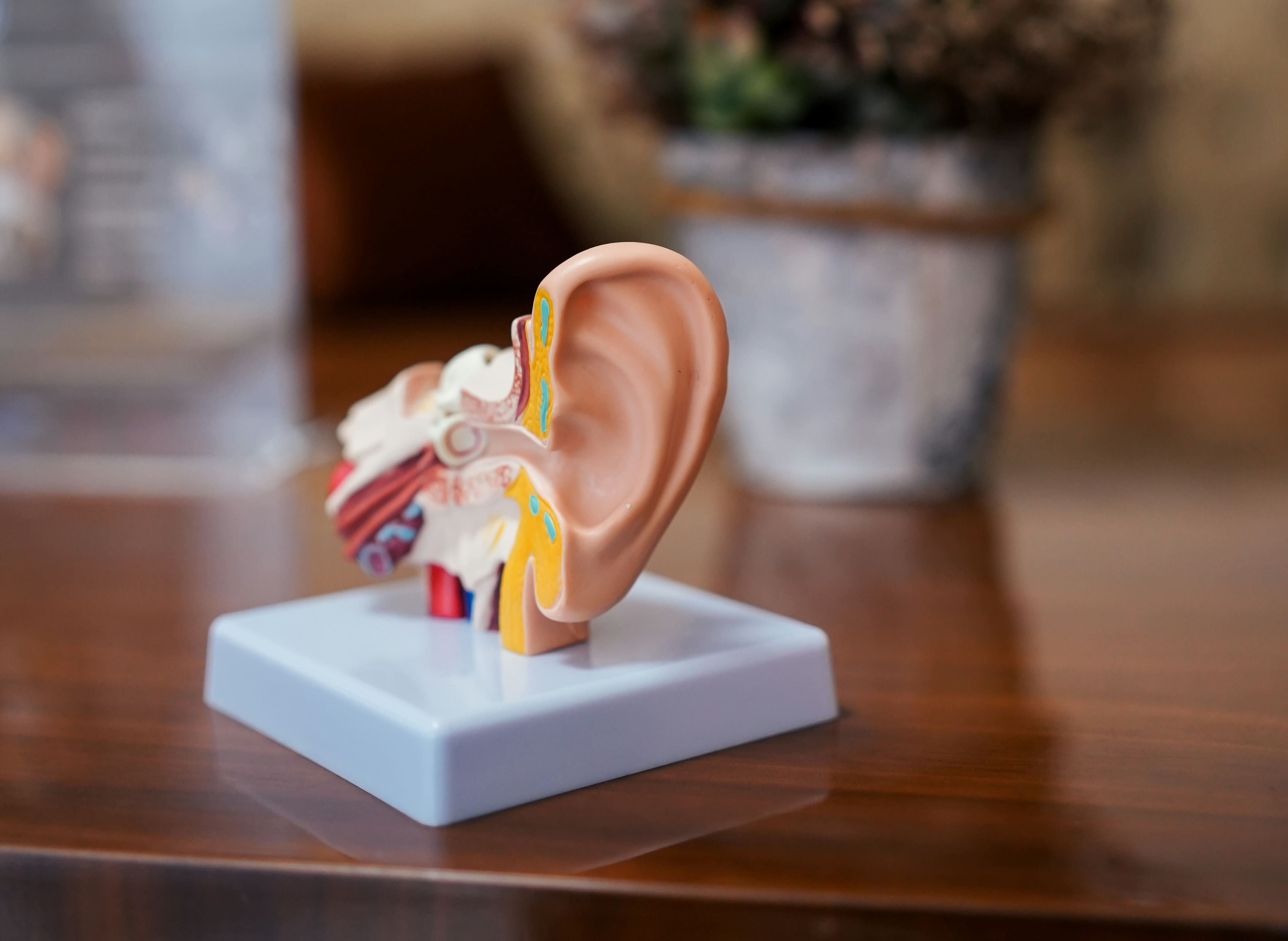
Otitis can develop in different parts of the auricle and internal ear structures. Depending on the affected area, there are three types of the condition:
- Outer ear otitis — inflammation of the external auditory canal and auricle, often associated with water entering the ear or injury caused by cleaning the ears.
- Middle ear otitis (also known as acute otitis media) — the most common form in adults. Inflammation occurs in the tympanic cavity, the space behind the eardrum.
- Inner ear otitis (labyrinthitis) — a rare but serious form in which inflammation in the middle ear spreads to the inner ear, causing dizziness and balance problems.
It is also important to mention fungal otitis of the outer and/or middle ear. This is a specific type of otitis caused by various types of fungi. Its symptoms can be very similar to those of a bacterial infection.
When pus accumulates significantly, the condition is sometimes referred to as purulent otitis. This form is more often associated with bacteria.
The treatment of fungal and bacterial otitis differs significantly. Therefore, it is important to remember that only a doctor can determine the cause of the inflammation and select the appropriate treatment after an examination.
Anyone can develop otitis at any time of year, especially after an acute respiratory viral infection (ARVI).
Symptoms of Acute Otitis Media
Acute otitis media is inflammation of the middle ear that develops rapidly, usually begins suddenly, and generally lasts no more than 3 weeks.
The main symptoms of acute otitis media include:
- ear pain, often severe and shooting
- hearing loss and a feeling of ear congestion
- increased body temperature of up to 39°C
- ringing or noise in the ear
- in some patients, pressure in the middle ear becomes so high that the eardrum cannot withstand it and ruptures (perforates) — when the eardrum is perforated, discharge from the ear may occur
The first 24 hours of the illness are often the most difficult: discomfort increases due to fluid accumulation and pressure in the tympanic cavity. The pain may be felt in the right or left ear, depending on which side is affected.
It is important not to delay treatment — controlling pain from the first hours can speed up recovery and reduce the risk of complications.
Gulnaz Toksanbaeva, ENT doctor at Kandinsky Clinic:
“Otitis can start even after an ordinary runny nose. Through the Eustachian tube, an infection from the nasopharynx can enter the middle ear. This is an anatomical feature that makes otitis a common complication of ARVI. Patients often ask me when they should see a doctor if they suspect otitis. I recommend not postponing a visit, so that a thorough examination can be performed and help prevent complications.”
Causes of Otitis
Otitis in adults most often develops as a complication of upper respiratory tract infections. Common causes include:
- Viral infections — most cases begin against the background of an ARVI, when swelling of the nasopharyngeal mucosa disrupts the function of the Eustachian tube.
- Bacterial infections — pneumococcus and Haemophilus influenzae. They can be an independent cause of otitis or develop secondarily against the background of viral inflammation that has already begun.
- Water entering the ear — particularly relevant to outer ear otitis.
- Allergies and chronic rhinitis — persistent swelling of the mucous membrane makes it difficult to ventilate the middle ear.
If the eardrum has been damaged, the risk of infection entering the ear increases. Use ear protection when swimming if you have previously experienced a ruptured eardrum.
Acute and Chronic Otitis: What Is the Difference?
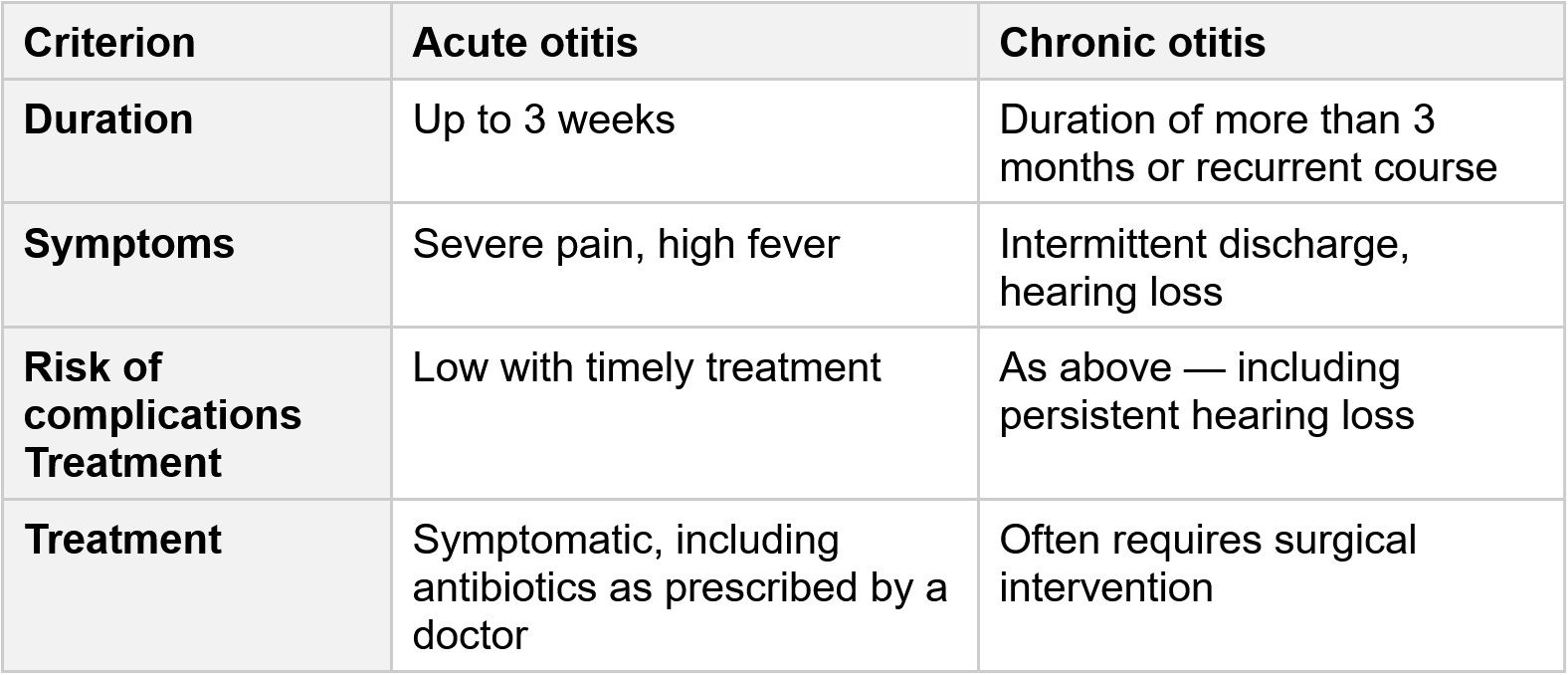
The differences between these forms can be conveniently summarized in a table, which helps quickly identify which type of condition is being discussed.
Treatment of Otitis in Adults
Symptoms and treatment of otitis in adults are closely related: the earlier the first signs are noticed, the easier it is to choose the appropriate treatment approach.
In most cases, otitis is initially treated symptomatically — meaning that pain is relieved and the progression of the condition is monitored. According to the medical reference StatPearls, acute otitis media resolves on its own in a significant proportion of patients. This approach is also supported by European clinical guidelines.
What to do with acute otitis:
- take painkillers and antipyretics — these medications usually provide relief within the first few days of use
- if there is no eardrum perforation, use local anesthetic ear drops
A doctor may prescribe antibacterial therapy if the condition does not improve within 3–4 days, a high fever persists, or the patient is at increased risk of complications.
How to tell if the eardrum is damaged
You may notice signs of eardrum perforation yourself:
- внезапное уменьшение боли, за которым следуют выделения из уха (жидкие, гнойные или с примесью крови)
- ощущение хлопка или щелчка в ухе в момент повреждения
- иногда — шум или свист при сморкании (воздух проходит через отверстие)
Only a doctor can confirm a perforation during an examination. This is why it is important not to put anything into your ear on your own before consulting a doctor: if the eardrum is perforated, alcohol-containing or lidocaine-containing medications can enter the middle ear and worsen the condition.
When Are Antibiotics Needed?
According to a systematic review of randomized studies comparing antibiotics with placebo in acute otitis media, antibiotics provide limited benefits — they only slightly reduce the duration of pain, while side effects occur in almost one in 13 patients.
For this reason, a watchful waiting approach is usually used, with antibiotics started only if the patient does not improve.
Complications of Otitis Media
If complications develop, otitis can pose a serious risk to overall health:
- permanent hearing loss,
- mastoiditis (inflammation of the bone behind the ear),
- in rare cases, intracranial complications; if these are suspected, a doctor may order a blood test and computed tomography (CT).
The risk of complications is higher in patients with weakened immunity, recurrent episodes of otitis, or improper self-treatment. Seeking medical attention promptly is the best way to prevent such consequences.
Labyrinthitis: A Separate Issue
Labyrinthitis is inflammation of the inner ear. It usually develops as a complication of otitis media or a viral infection that has spread within the temporal bone or damaged the organ of Corti.
Labyrinthitis causes severe dizziness and impaired balance. Symptoms may also include nausea, sometimes accompanied by noise or ringing in the ear and hearing loss on the affected side, whether the left or right ear is involved.
Treatment of inner ear otitis requires consultation with an ENT doctor and a neurologist. The condition can mimic a stroke, making accurate diagnosis particularly important.
Otitis and Pressure Changes During Flights
Sudden pressure changes during a flight can cause a specific type of otitis known as barotrauma of the ear, or aerotitis.
It occurs because the Eustachian tube does not have enough time to equalize the pressure difference between the middle ear and the atmosphere, especially when a person has a runny or blocked nose.
If you are planning to fly while experiencing cold symptoms, using decongestant nasal drops before takeoff and landing may reduce the risk. For Dubai residents who frequently travel long distances by air, this is an important preventive factor to keep in mind, especially if they have experienced otitis before.
Prevention of Otitis
Prevention includes several simple measures: timely treatment of ARVI and rhinitis, careful ear hygiene without inserting anything deeply into the ear canal, protecting the ears from water when swimming, and avoiding smoking.
Tobacco smoke irritates the mucous membrane of the nasopharynx and Eustachian tube, impairs its ventilation function, and increases the risk of developing otitis both in smokers and in people exposed to secondhand smoke. This is particularly important for young children: secondhand smoke is one of the proven risk factors for recurrent otitis in children.
Otitis Treatment at Kandinsky Clinic
At Kandinsky Clinic, ENT doctors perform a comprehensive evaluation for otitis, including otoscopy and, when necessary, audiometry to assess the degree of hearing loss and tympanometry to evaluate the condition of the eardrum and pressure in the middle ear.
We follow evidence-based medicine principles: antibiotics are prescribed only when there are clear indications. The clinic's own laboratory allows test results to be obtained quickly when laboratory testing is required for diagnosis. More information about the laboratory is available on our website.
To book an appointment with an ENT doctor in Dubai or ask questions, contact us via WhatsApp at +971555660877 or by phone at +97145631200.
Sources
- StatPearls (NCBI). Acute Otitis Media
- Holm N.H., Rusan M., Ovesen T. Acute otitis media and antibiotics – a systematic review. Danish Medical Journal, 2020
- Rijk M.H., Hullegie S., Schilder A.G.M., Kortekaas M.F., Damoiseaux R.A.M.J., Verheij T.J.M., Venekamp R.P. Incidence and management of acute otitis media in adults: a primary care-based cohort study. Family Practice, 2021
- Assiri K., Hudise J., Obeid A. Risk Factors for Chronic and Recurrent Otitis Media in Children: A Review Article. Indian J Otolaryngol Head Neck Surg, 2024
Author: Gulnaz Toksanbaeva, ENT doctor at Kandinsky Clinic, 7 years of experience (DHA License: No. 80101836-001) Medical editor: Olga Polikina, Chief Physician at Kandinsky Clinic, Candidate of Medical Sciences (DHA License: No. 08705887-001)
Disclaimer: The information in this article is not medical advice. For any questions concerning your health, please consult a doctor.