Treatment of rosacea on the face
Rosacea is a non—communicable disease in which persistent redness appears on the face, small vessels dilate and skin sensitivity increases. Many people perceive this as a temporary reaction, but in fact it is a chronic disease that requires attention.
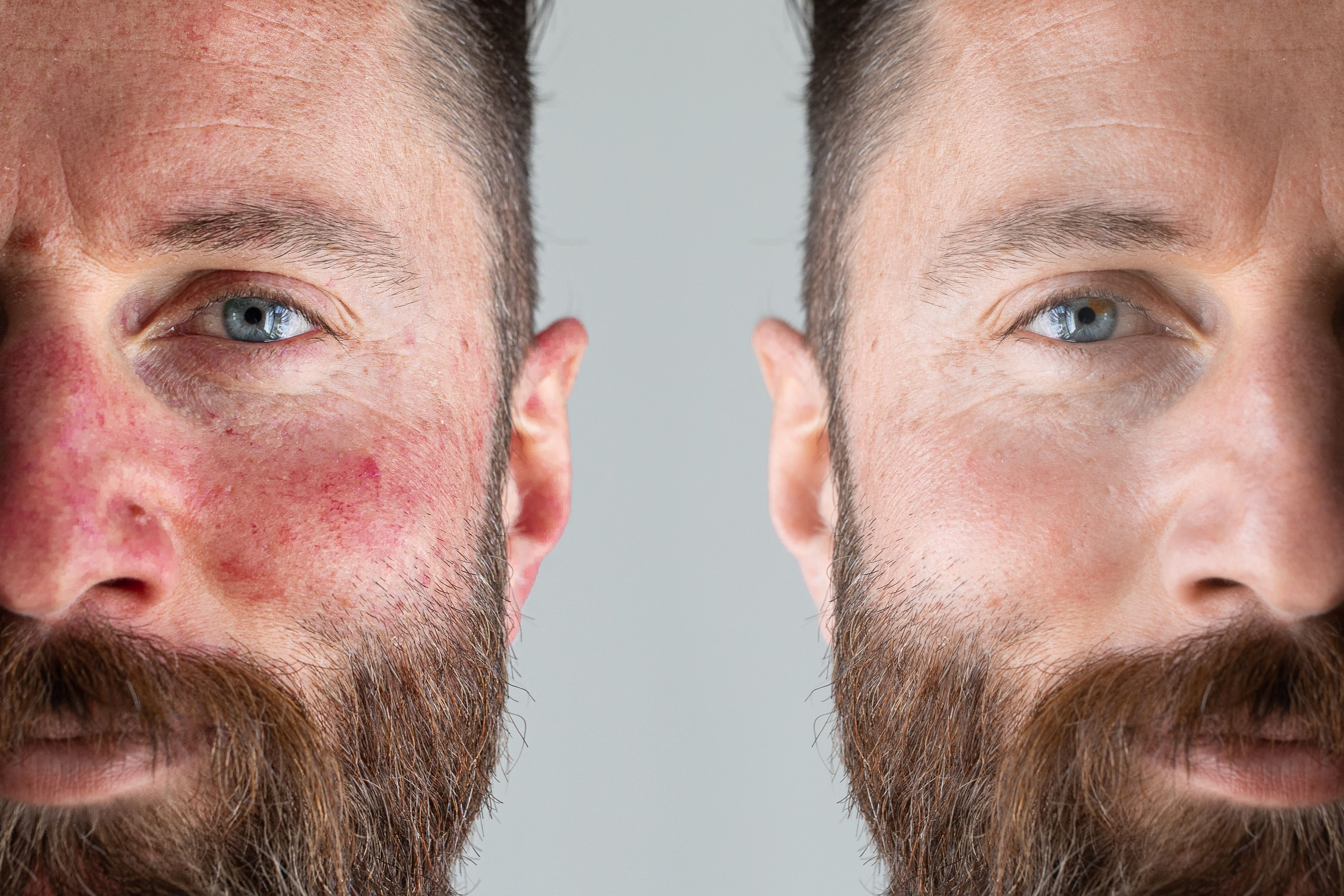
Rosacea does not go away on its own, but with the right therapy, its manifestations can be significantly reduced and the condition of the facial skin can be stabilized.
Researches They show It is estimated that the global prevalence of rosacea is about 5%.
The disease is more common in people with fair skin type between the ages of 30 and 50. Rosacea is more common in women due to significant hormonal fluctuations, especially during perimenopause and menopause.
How rosacea manifests itself
The main symptoms of rosacea usually include the following manifestations:
- Persistent redness of the skin
- Vasodilation
- Inflammatory elements (rashes or small pustules)
- Burning sensation.
In the affected areas, the skin becomes more sensitive, with signs of increased reactivity, and may react to temperature, care products, and stress.
At the same time, the manifestations in men and women may differ slightly. According to the American National Rosacea Society, women's cheeks and chin are mostly affected, while men's symptoms are more pronounced in the nose area.
Also, men are much more likely to have a thickening of the nasal skin (rhinophyma), whereas in women the disease usually manifests itself in the form of redness and sensitivity of the skin.
Forms of rosacea
If left untreated, rosacea can worsen. This does not always happen, but without therapy, the likelihood of new symptoms becomes higher.
Modern medicine less often considers rosacea through the stages of development — we are talking about different forms and manifestations of the disease, which can be combined with each other. Several typical flow patterns:
Periodic redness
In this situation, there is a temporary redness of the skin, a feeling of blood rushing to the face. This is often attributed to skin sensitivity or a reaction to external factors.
Persistent redness
The redness becomes more pronounced and lasts longer. It most often affects the cheeks, nose, forehead or chin.
Rashes and vascular changes
Inflammatory elements appear on the face (redness, rashes, pustules), and small dilated vessels become noticeable — thin red lines (telangiectasia).
Thickening of the skin
The skin may thicken, primarily in the nose area. This is a rarer, but pronounced variant of the course of the disease.
Separately, it is worth mentioning ophthalmosacea, a form of the disease in which the eye area is affected. It can manifest as redness, dryness, a feeling of "sand" or burning. In the practice of doctors, such cases are quite common, but patients do not always associate these symptoms with rosacea of the facial skin.
Diagnosis of rosacea
Diagnosis of rosacea usually does not require complex examinations. The doctor evaluates the appearance of the skin, the nature of the redness and clarifies the medical history — when the first signs appeared and what could provoke an exacerbation.
In the early stages, the disease can sometimes be confused with other conditions: sunburn, acne, an allergic reaction to cosmetics, or hot flashes associated with hormonal changes.
In some cases, the doctor may prescribe additional examinations or laboratory tests to rule out other skin diseases. This is especially important in the presence of severe symptoms or frequent exacerbations.
Causes and factors of development
The exact causes of the disease have not been fully determined. A combination of factors plays a role in the development of rosacea:
- Vascular features
- Genetic predisposition
- Environmental impact
- Lifestyle.
Exacerbations are often triggered by temperature fluctuations, stress, alcohol, and certain types of food.
Why it is important to treat rosacea
Rosacea is a chronic disease. This means that it is not completely cured, but you can control the course of the disease and significantly reduce its manifestations.
Properly selected therapy helps to reduce the severity of symptoms and reduce the frequency of exacerbations.
Without treatment, the disease can progress: redness increases, new inflammations appear, and the skin structure changes.
Treatment methods
The treatment of rosacea on the face is selected individually. Depending on the condition of the skin and the severity of the symptoms, various methods can be used.:
- Drug therapy
- The use of external remedies
- Hardware procedures
- Lifestyle correction.
Important: it is not recommended to select the means yourself — a doctor should treat rosacea, especially when it comes to powerful drugs.
Skin care for rosacea
The right approach to skin care helps both as part of the treatment of rosacea patients and as a preventive measure.
At the same time, care should be as gentle as possible. Even the usual remedies that used to be suitable for rosacea can cause irritation.
Basic care recommendations include:
- Gentle cleansing without aggressive ingredients
- Regular sun protection
- Avoiding products that can irritate the skin
- The use of specialized cosmetics for sensitive skin.
Lifestyle and the impact of triggers
The condition of the skin directly depends on the lifestyle. The following factors can influence the course of the disease::
- Stress
- Food
- Climate
- Habits.
It is important to identify the individual factors that provoke exacerbations and minimize their impact as much as possible.
Rosacea in Dubai
Living in Dubai can enhance the symptoms of rosacea. High temperatures, active sun, and sudden fluctuations between the heat outside and air—conditioned rooms all affect the condition of blood vessels and facial skin.
Alesya Yurakova, dermatologist and cosmetologist at the Kandinsky Clinic:
"In Dubai, it is important not only to take into account the climate, but also to adapt daily habits. We often see that exacerbations are related not so much to the sun itself, but rather to a combination of factors — overheating, sudden temperature changes, and improper care. In such conditions, the skin needs more delicate support and regular monitoring."
Rosacea treatment at the Kandinsky Clinic
The Kandinsky Clinic in Dubai provides comprehensive treatment for rosacea on the face, which includes diagnosis, selection of therapy and supervision by specialists.
Experienced dermatologists work with patients to assess skin condition, severity of symptoms, and select an individual treatment plan. The approach is based not only on the elimination of external manifestations, but also on the control of common factors affecting the course of the disease.
The Kandinsky Clinic in Dubai offers not only consultations and diagnostics in its own laboratory, but also effective hardware procedures.
The clinic has a vascular specialist who helps to remove the pronounced redness and vascular network with the help of modern technologies.
For this purpose, the Candela Vbeam Perfecta laser system is used — one of the most effective methods of influencing the vessels of the skin. The laser works precisely, reduces redness and helps to improve the appearance of the skin without prolonged recovery.
Learn more about the method can be read separately.
Make an appointment with a dermatologist in Dubai You can use WhatsApp or by phone at the Kandinsky Clinic. The doctor will assess the condition of the skin, prescribe tests, if necessary, which can be done in the Kandinsky Clinic's own laboratory, and select the optimal treatment strategy.
Author: Alesya Yurakova, dermatologist, cosmetologist at the Kandinsky Clinic, work experience — more than 13 years
Medical Editor: Olga Polikina, Chief Physician of the Kandinsky Clinic, Candidate of Medical Sciences