What is the difference between colds and acute respiratory viral infections?


"Colds" and "acute respiratory viral infections" are terms that many people use synonymously. But what is the difference between acute respiratory viral infections and colds? It is important to understand this in order to properly assess your condition and understand when home treatment is enough and when you need the help of a doctor.
The short answer is that the common cold is one of the forms of acute respiratory viral infections caused by specific viruses. At the same time, it occurs, as a rule, in a mild form.
What is SARS?
The abbreviation ARVI stands for "acute respiratory viral infection." This is a large group of respiratory tract diseases.
Acute respiratory infections are among the most common diseases in the world.
The causative agents of SARS can be more than 200 different viruses: rhinoviruses, adenoviruses, coronaviruses, parainfluenza viruses and others. That is why a person does not develop stable immunity to acute respiratory viral infections in general — each time the disease can be caused by a new pathogen.
What is a cold?
The common cold is the "folk" name for acute respiratory viral infections in a mild form. The US Centers for Disease Control and Prevention (CDC) cites rhinoviruses as one of the most common causes of colds.
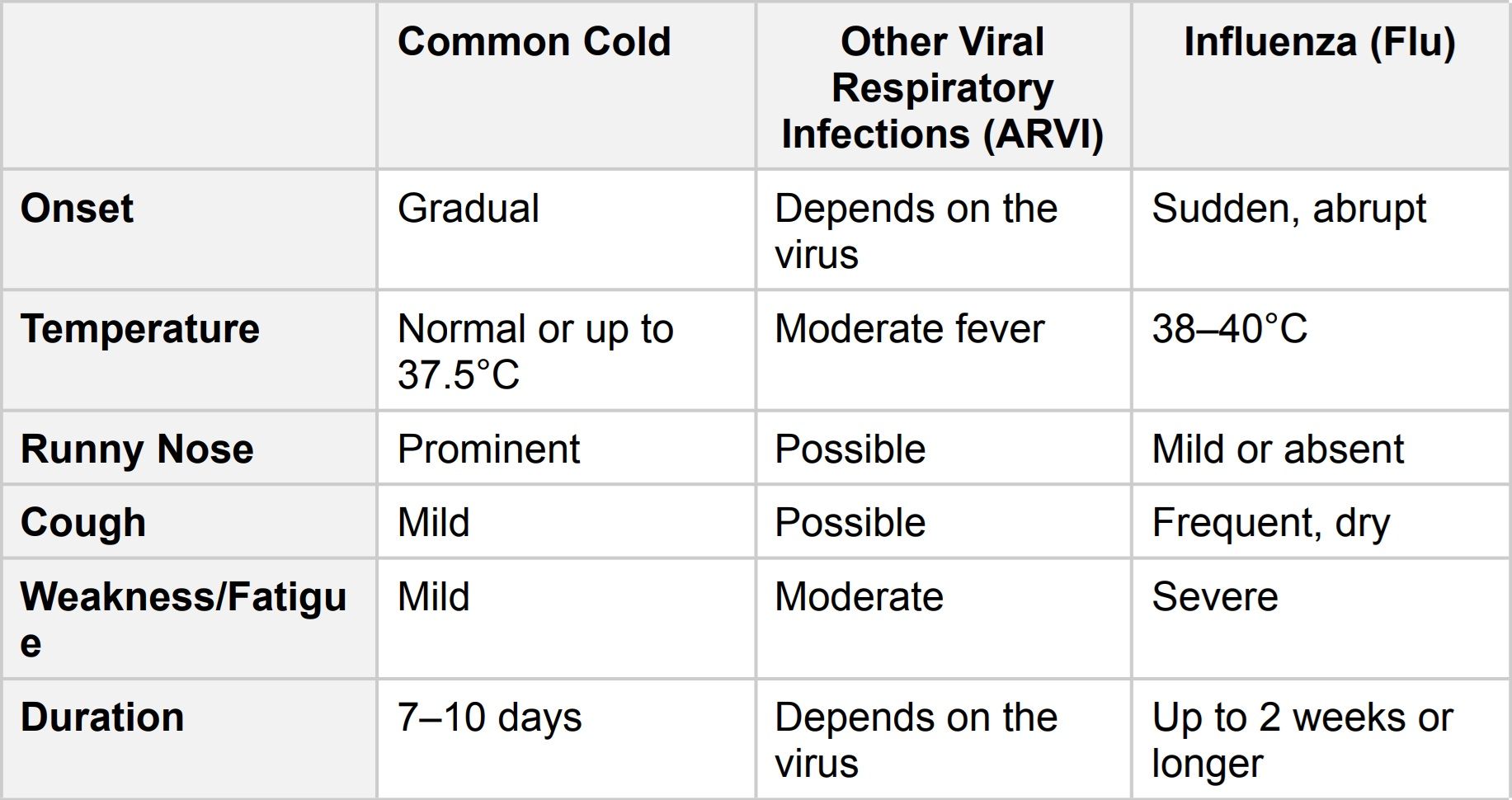
A cold usually resolves in a short time — usually in 7-10 days. Her typical symptoms are nasal congestion, runny nose, sore throat, mild cough, and sometimes headache. The temperature usually does not rise above 37.5°C or remains normal.
What is the difference between acute respiratory viral infections and colds?
The difference between colds and acute respiratory viral infections is, in fact, the difference between private and general.
ARVI is a broad concept that includes all viral infections of the upper respiratory tract. The common cold is just one of them, with a characteristic mild clinical picture.
In practice, it is easier to identify differences through the symptoms and dynamics of the disease. So, a cold begins gradually: first a sore throat, then a runny nose and stuffy nose, then a cough. Other viral infections (such as the flu) begin more acutely with fever, severe weakness, and muscle pain.
Dmitry Kravchenko, general practitioner and hematologist at the Kandinsky Clinic:
"At the reception, patients often say, "I just have a cold." But this phrase can hide very different states. It is the doctor's job to distinguish a mild viral infection from a more serious illness. This is especially important if the symptoms persist for several days or increase."
Is the flu also an acute respiratory viral infection?
Yes, the flu formally refers to viral infections of the respiratory tract, but it stands alone. It is caused by influenza viruses type A and B, which have a much more aggressive effect on the immune system than the pathogens of the common cold. According to the World Health Organization (WHO), between 3 and 5 million severe cases of influenza are recorded worldwide each year. It can also cause serious complications such as pneumonia, myocarditis, and encephalitis.
The main difference between the flu and the common cold is that the symptoms appear abruptly, in the very first hours. The temperature rises to 38-40 ° C, the person feels severe weakness, headache and muscle pain. Runny nose and stuffy nose with flu are less pronounced than with colds.
When does vaccination help
As already mentioned, due to the diversity of SARS pathogens, there is no universal vaccine against them. The main protection here is hand hygiene, ventilation and minimizing contact with the sick.
But with the flu, the situation is different: there is a vaccine for it, and WHO recommends getting vaccinated annually, especially for people from risk groups — the elderly, pregnant women, people with chronic diseases, and children.
At the Kandinsky Clinic, you can get a flu shot at a convenient time, without queues.
The main differences between colds, acute respiratory viral infections and flu:
Acute respiratory viral infections in Dubai: why they get sick even in summer
In countries with a temperate climate, acute respiratory viral infections are associated with the cold season. In Dubai, everything is different: viral infections of the respiratory tract occur all year round.
Locals spend most of the day in enclosed spaces, where viruses spread faster. At the same time, the conditioned air dries out the mucous membrane and reduces its protective properties, and sudden temperature fluctuations between the street and the room create an additional burden on the immune system.
At the same time, the heat outside often masks the first symptoms — a person attributes the malaise to fatigue or overheating.
When to see a doctor
Most people cope with a mild cold at home. But there are symptoms in which you should not postpone a visit to the doctor.:
- temperatures above 38.5°C last for more than 3 days;
- chest pain, shortness of breath, severe headache appeared;
- the disease occurs against the background of chronic diseases.
The difference between a cold and acute respiratory viral infections is important in such situations: what looks like a common cold may turn out to be a more serious viral infection with a risk of complications.
Help with acute respiratory viral infections and colds at the Kandinsky Clinic
At the Kandinsky Clinic in Dubai, therapists will help you figure out exactly what you are facing — a cold, another viral infection, or the flu. The reception is conducted in Russian. If necessary, you can take tests in the clinic's own laboratory and get the results quickly, without unnecessary trips around the city.
Sign up for adult therapist's appointment It is possible via WhatsApp or by calling the clinic +97145631200.
Sources
- WHO. Flu (seasonal). Information bulletin.
- CDC. About Rhinoviruses.
- Johns Hopkins Medicine. Know Your Respiratory Virus Enemies This Season.
Disclaimer: The material has been prepared for educational purposes and does not replace a face-to-face consultation with a doctor. The decision on diagnosis and treatment should be made jointly with a specialist.